


Hollingbourne, Kent
Up to 1834
A workhouse operated at Lenham from around 1730 (Hitchcock, 1985).
A Parliamentary report of 1777 recorded parish workhouses in operation at Hollingbourne (with accommodation for up to 40 inmates), Boxley (36), Lenham (40) and Sutton Valence (20).
A building known as the Cloth Hall, on North Street, Headcorn, is said to have served as the parish workhouse.
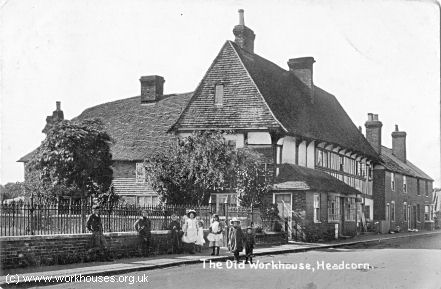
Headcorn 'Old Workhouse', c.1920.
© Peter Higginbotham.
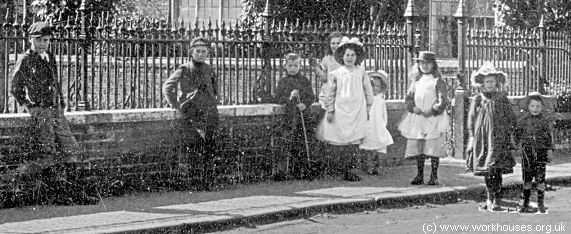
Headcorn 'Old Workhouse', c.1920.
© Peter Higginbotham.
A cottage on Sittingbourne Road, Detling, was the parish's workhouse in the early 1800s. It is now a private residence known as Workhouse Cottage.
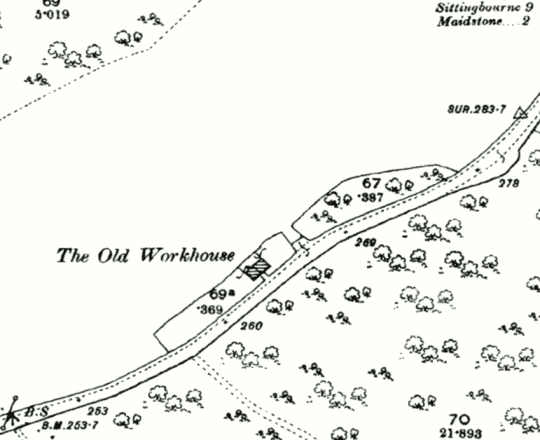
Detling workhouse site, c.1896
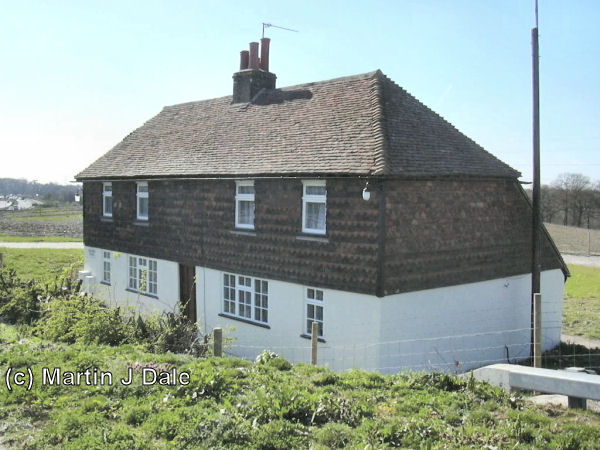
Workhouse Cottage, Detling, 2003.
© Martin J Dale.
After 1834
The Hollingbourne (frequently spelled Hollingbourn in older documents) Poor Law Union officially came into existence on 12th October 1835. Its operation was overseen by an elected Board of Guardians, one representing each of its 23 constituent parishes as listed below:
County of Kent: Bicknor, Boughton Malherbe, Boxley, Bredhurst, Broomfield, Chart next Sutton Valence [Chart Sutton], Debtling [Detling], Frinsted, Harrietsham, Headcorn, Hollingbourne, Hucking, Langley, Leeds, Lenham, Otterden, Stockbury, East Sutton, Sutton Valence, Thurnham, Ulcombe, Wichling, Wormshill.
The population falling within the Union at the 1831 census had been 13,365 with parishes ranging in size from from Bicknor (population 44) to Lenham (2,197). The average annual poor-rate expenditure for the period 1833-5 had been £18,400 or £1.7s.6d. per head of the population.
Built in 1836, the Hollingbourne Union Workhouse stood on the Maidstone to Ashford Road. The Poor Law Commissioners authorized an expenditure of £5,000 on the building which was to accommodate up to 300 inmates. It had an H-shaped layout with an entrance block facing to the south which would probably have contained the board-room, porter's room and master's quarters at the centre. Inmates' accommodation was located to each side and in the ranges to the rear. The workhouse location and layout are shown on the 1895 map below:
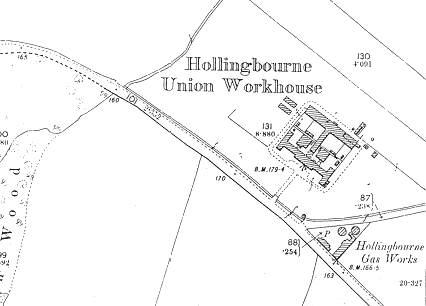
Hollingbourne site, 1895
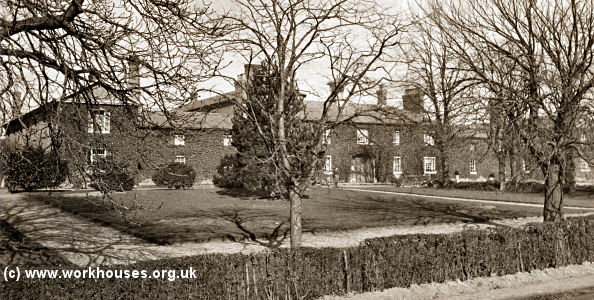
Hollingbourne workhouse from the west, c.1920.
© Peter Higginbotham.
In the 1860s, a fife and drum band was started for the boys in the workhouse. In 1864, the children had an outing to Gravesend.
An inspection in 1866 noted that adult male inmates were employed in gardening, while the boys learned tailoring and shoemaking. Women and girls were occupied in oakum picking, domestic work and needlework.
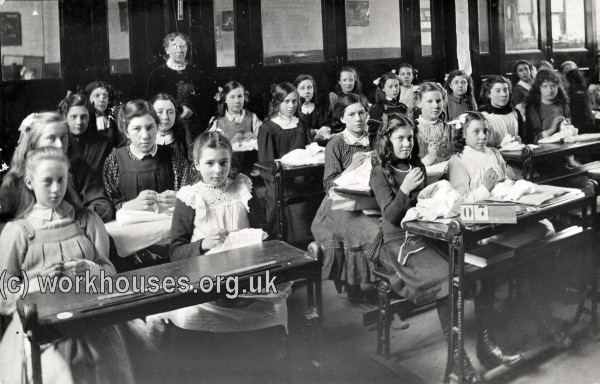
Girls from Hollingbourne workhouse at school.
© Peter Higginbotham.
A new washing machine was installed at the workhouse in 1900. The weekly laundry then required the employment of just one woman rather than the four that had previously been needed, and the work was finished by Wednesday at the latest.
In 1914, a chapel was opened at the workhouse, it construction funded through a gift from Mrs Cloudesley Marsham (wife of the Rector of Harrietsham). and her sister, Miss Birch Richardson. With seating for about 133 persons, it was designed and erected by Messrs. Bolton and Paul of Norwich.
In November 1914, nineteen wounded soldiers were treated in the workhouse, the first such institution in the country to house war casualties
In 1920, the rising cost of staff at the workhouse resulted in the decision to close it, with the existing inmates being transferred to the Maidstone Union workhouse at Coxheath. The buildings were then demolished with the exception of the 1895 mortuary, which survived until recently in the grounds of a property known as White Heath.
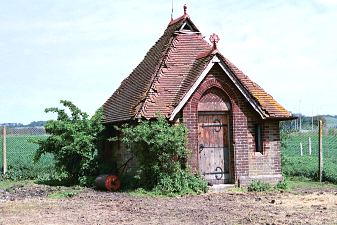
Hollingbourne workhouse mortuary from the south-west, 2001.
© Peter Higginbotham.
Staff
Inmates
Records
Note: many repositories impose a closure period of up to 100 years for records identifying individuals. Before travelling a long distance, always check that the records you want to consult will be available.
- Kent History and Library Centre, James Whatman Way, Maidstone, Kent ME14 1LQ Holdings include: Guardians' minutes (1848-1930); Births (1866-1920); Deaths (1866-1921); Creed registers (1914-21); etc.
- Canterbury Cathedral Archives, The Precincts, Canterbury, Kent CT1 2EH. Baptisms (1837-76).
Bibliography
- Higginbotham, Peter Workhouses of London and the South East (2019)
- Hitchcock, T.V. (1985) The English workhouse: a study in institutional poor relief in selected counties. l695-l750. (DPhil thesis. University of Oxford.)
Links
- None.
Acknowledgment
- Thanks to Martin Dale for the picture of the former Detling workhouse where he grew up.
 For US readers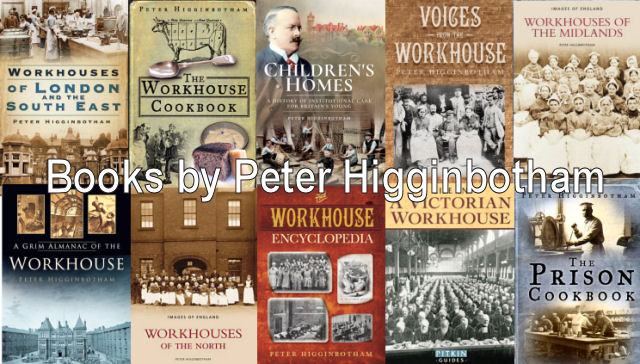
Unless otherwise indicated, this page () is copyright Peter Higginbotham. Contents may not be reproduced without permission.