


Popular Myths about the Workhouse
Myth 5 - Workhouse beds were like wooden coffins.
Workhouse beds were generally just ordinary beds of the day, with a wooden or metal frame, a mattress stuffed with flock or straw, sheets, blankets and a pillow.
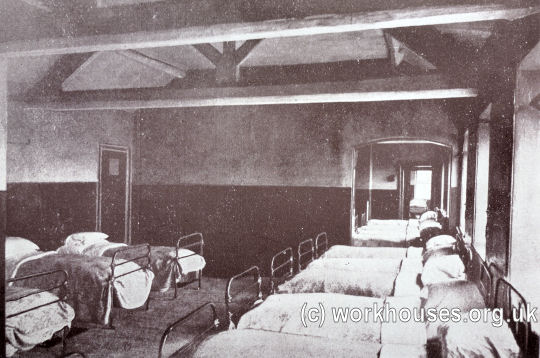
Hunslet workhouse dormitory, c.1900. © Peter Higginbotham
The idea that workhouse beds were in the form of a row of coffin-like wooden boxes is probably due to a frequently reproduced 1867 illustration of the new St Marylebone casual ward, where vagrants were allowed to stay for one night. Its beds were indeed coffin-like but they were never used in the main workhouse.
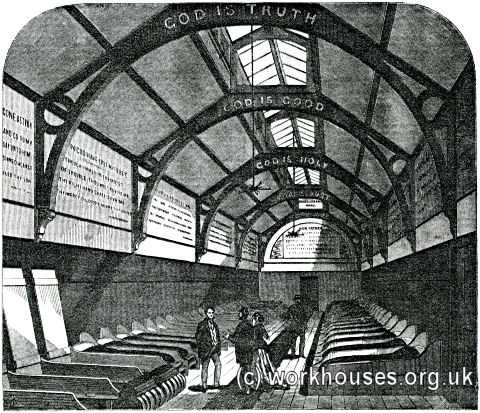
St Marylebone Workhouse new casual ward, 1867. © Peter Higginbotham
The coffin-bed myth was perpetuated in the 1948 film of Oliver Twist where a workhouse dormitory is clearly based on the St Marylebone image.
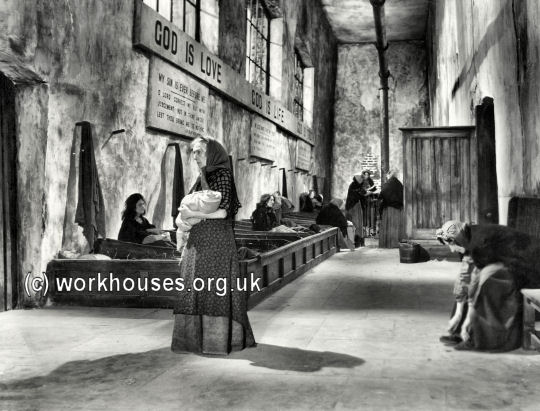
Workhouse dormitory in Oiver Twist, 1948.. © Peter Higginbotham
Coffin beds, which were very compact, were subsequently adopted by a number of other hostel-style institutions, including some run by the Salvation Army.
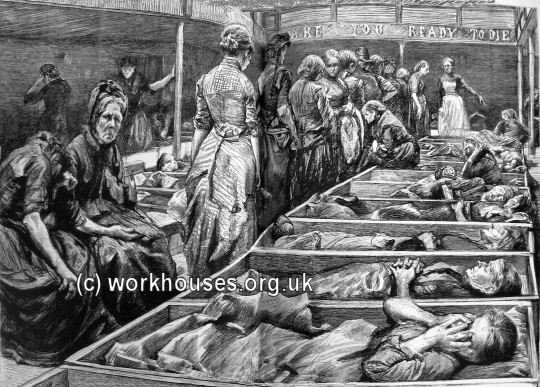
Coffin beds in Salvation Army women's hostel, 1892. © Peter Higginbotham
Next myth...
 For US readers
Unless otherwise indicated, this page () is copyright Peter Higginbotham. Contents may not be reproduced without permission.